
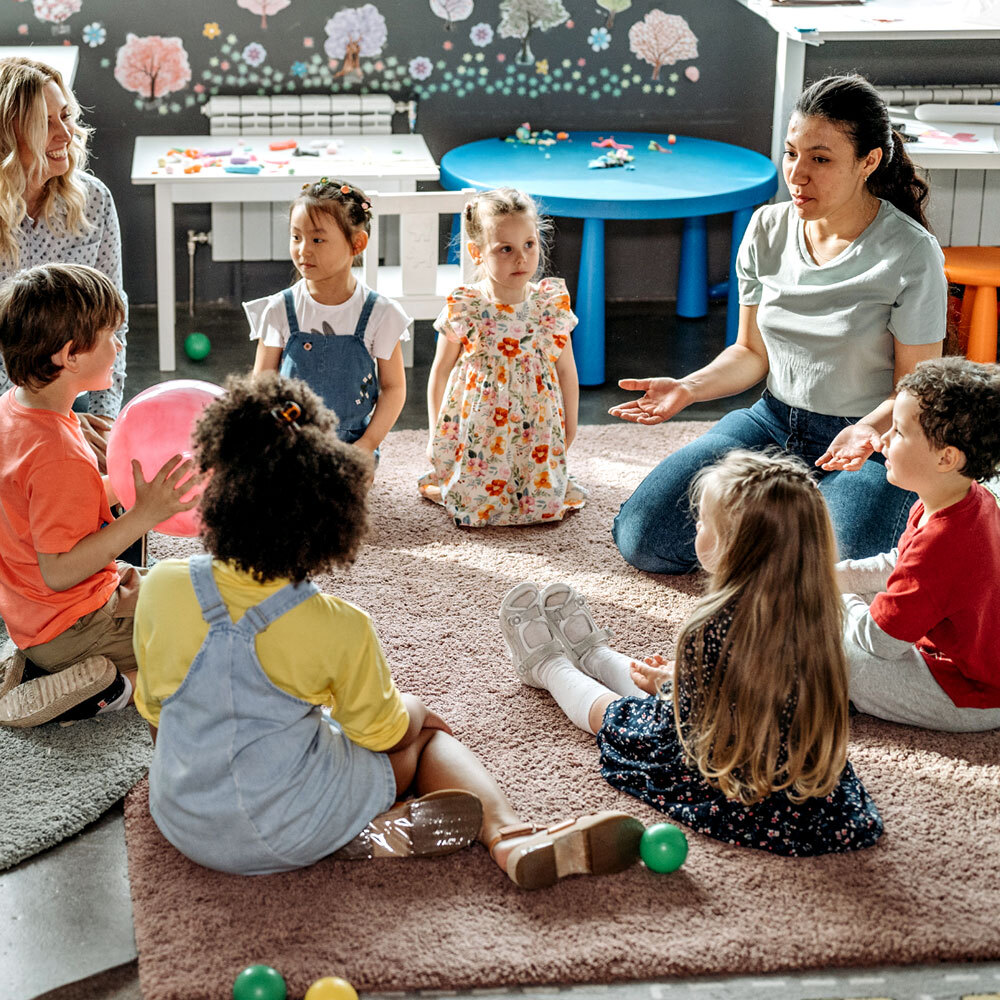
Every parent wants to know their child is flourishing. You drop them off at school and wonder what happens in those classrooms. Are they making friends? Do they feel safe when they spill a cup of milk or have a bit of a zipper problem? How does play become real learning?
Early childhood experiences are what shape your child. From before they even sit at a school desk, their brain forms connections through their interactions. If you understand how a young child grows, you can feel confident in the choices you make as a parent.
The Power of Emotional Safety
Children only explore the world when they feel secure. Emotional security is the launchpad for all future learning. If the child knows that an adult is there to offer comfort they will take risks. They'll try to build their block tower higher; they'll attempt the new puzzle.
The American Academy of Pediatrics has made it clear that early relational health is the foundation of core executive function and self-confidence. It's the little things that build big resilience. When a teacher can validate a child's feelings in the middle of a difficult situation, the child learns self-regulation. That internal balance lets them focus on learning rather than feeling overwhelmed.
How Social Skills Develop Through Play
Sharing doesn't happen overnight. Young toddlers will often just be doing parallel play (sitting side by side, not sharing toys at all). That's perfectly normal. It's only from about 3 or 4 years of age that we see a shift to cooperative play, with the children starting to take on roles, sharing blocks, and building stories together.
The CDC notes that by age four, children begin to comfort upset peers and take turns in group situations. These peer interactions are a great way to teach patience, cooperation, and empathy. In a guided group setting, children get the opportunity to practice these social routines every day with an adult present to support them.
Turning Curiosity into Academic Skill
Early academics rarely look like drills or flashcards. Real learning comes through active discovery. Sorting colored buttons teaches early math categorization. Singing nursery rhymes is a great way of building awareness of word patterns and phonics. Asking open questions sparks natural scientific thinking.
The Harvard Center on the Developing Child shows that back-and-forth interaction builds brain architecture and establishes language pathways. When teachers respond to your child's questions with attention and curiosity, they foster curiosity. That is the very foundation of reading, math, and problem-solving.
Choosing the Right Environment for Your Family
Parenting is about making clear choices, and finding a program that is in line with your values is a source of peace of mind. Good early learning is not simply about supervision. It's about creating the day-to-day opportunities for emotional balance, social development, and active exploration.
Sparkles! Early Learning Academy is all about creating an environment where children feel safe to try, to fall, and to try again. Our structured routines and our wonderful, caring staff provide the confidence your child needs for kindergarten and beyond.
Ready to see how our balanced approach helps your child grow? Book a tour to visit Sparkles! Early Learning Academy at either our Fairfax (Fair Oaks) or Arlington/Crystal City location.