
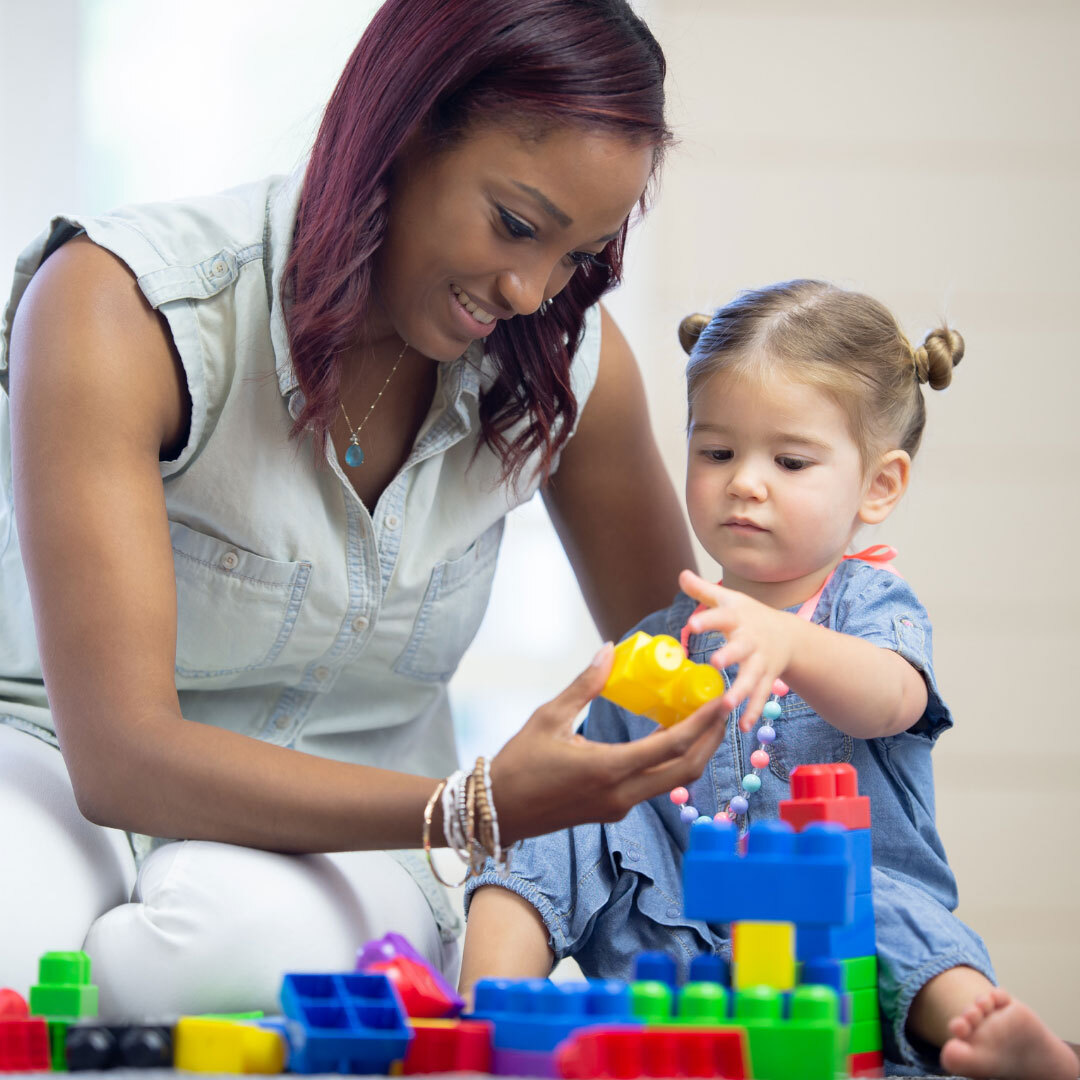
There’s a well-known pattern to the morning drop-off. You give the child their lunchbox, hand over a backpack that looks a bit too big for their small shoulders, and then watch them go into a room filled with blocks, paint, and sensory bins. To someone watching from the outside, it seems to be just ordinary play. In fact, each gesture, song, and shared story in that room helps build the structure of a human mind.
Early childhood teachers accomplish much more than just looking after the classroom. When a child is young, their brain sets up over one million new neural connections each second. The teachers who are in charge of those early years function as neuro-architects, developing the child’s social skills, emotional resilience, and cognitive strength as a result of each interaction.
Beyond Supervision to Active Brain Building
What happens when a teacher bends down so that they are at the same level as a child, listens carefully as the child talks about a heap of wooden blocks, and then asks what would occur if one more block were placed on top is something remarkable. This type of interaction is termed ‘serve-and-return’ by scientists. Just as in a game of tennis, the child sends out a signal in the form of a word, some babbling, or a gesture, and the teacher replies with an attentive and significant response.
The latest figures from the Centers for Disease Control and Prevention show that consistent and responsive care directly contributes to the attainment of early milestones in both communication and the social area. By responding in a predictable and warm manner, teachers help to establish the neural pathways associated with language and logical thinking.
This situation enables children to develop a sense of security. They come to realize that their surroundings react to their curiosity, and as a result gain the confidence required to take on more difficult tasks later on.
Building Emotional Balance and Self-Regulation
A three-year-old who is having a go with their favorite toy is engaging in a complicated emotional exercise. One doesn’t automatically learn to manage frustration, to wait patiently, and to name one’s strong feelings; such things need to be taught with guidance.
Early educators act as emotional co-regulators; if a child has a meltdown over a puzzle that is being shared, an experienced teacher intervenes by acknowledging the emotion and, at the same time, establishing clear boundaries, and giving the child the exact words necessary to get from impulse to self-control.
A clinical report published by the American Academy of Pediatrics states that good early relationships and the supportive interactions between caregivers act as an important protection against daily stress and directly promote long-term resilience; teachers who achieve this balance provide children with the internal resources they need to cope with difficulties both in and outside the classroom.
Transforming Everyday Play into Future Leadership
Play-based learning is frequently mistaken for unstructured idle time, whereas intentional play constitutes structured activity for a developing mind. Research highlighted by the National Institutes of Health shows that stable and well-supported early learning environments have a direct effect on socioemotional and cognitive outcomes.
When teachers design play spaces, they insert subtle learning triggers that prompt critical thinking:
- Executive function: The ability to follow multi-step instructions during group games or as part of a cleanup routine.
- Complex communication: Negotiating roles in dramatic play scenarios, such as assigning who runs the pretend grocery store.
- Problem solving: Testing balance, weight, and geometry while constructing ramps for toy cars.
The early experiences develop adaptability, curiosity, and empathy—which are the basic qualities of future leaders.
Practical Steps for Parents at Home
You don’t need a teaching qualification or spend hours getting ready in order to put teacher-recommended practices into your daily routine; merely making a few small changes to your everyday conversations has a lasting effect.
- Put into practice the three-second pause: When your child asks a question or makes a statement, pause for three seconds before replying. This provides time for their brain to organize its thoughts and to express more in-depth ideas.
- Start by identifying the emotion: If you’re experiencing strong emotions, identify the emotion before trying to solve the problem; for example, saying “I can see that you’re frustrated because the tower has fallen” helps to calm their nervous system.
- Ask open questions during routine tasks: Turn laundry folding or grocery sorting into a collaborative game by asking open-ended questions like, “Which box do you think weighs more?”
Seeing a high-quality classroom in action makes all the difference. Schedule a tour at our Fairfax location or Arlington location to see our educators in action and explore our play-based learning environment.
Frequently Asked Questions
What is serve and return interaction, and why does it matter?
Serve and return is similar to playing tennis in a conversation. If a young child points, babbles, or asks a question, the adult responds by acknowledging the child, naming the object, or posing a further question. It is through these small interactions that the brain connections that support language development, curiosity, and emotional security are formed and strengthened.
How do early childhood teachers help children handle big meltdowns?
Experienced teachers serve as emotional co-regulators. Rather than just suppressing a tantrum, they lower themselves to the child’s level, acknowledge the basic emotion and assist the child in putting their feelings into words. As a result, children develop the internal structure necessary to progress from feeling frustrated to exercising self-control over time.
Will play-based learning be sufficient to prepare my child for academic work in kindergarten?
Yes, guided play is a structured activity for a child’s mind; it teaches spatial reasoning and physics when children build with blocks, builds negotiation and impulse control through dramatic play, and improves working memory through group games. These executive function skills are the building blocks for formal reading, writing, and mathematics.
What are the main signs indicating that a daycare teacher is actively promoting brain development?
Look for teachers who make eye contact, ask open questions that encourage thinking rather than yes-or-no answers, and stay calm under stress. In a high-quality environment, structured routines are balanced with open-ended exploration based on the children’s interests.
What can parents do to apply early education techniques when they have busy routines at home?
You can practice simple things, such as waiting three seconds before answering your child’s questions, so they have time to think through what they want to say. You can also make a big impact by naming emotions before trying to solve a problem and by turning routine activities such as sorting groceries or folding laundry into collaborative problem-solving games.